Food Poisoning in Ghana: What to Eat and What to Avoid
Food poisoning is one of the most common health complaints in Ghana. With our love for street foods like waakye, fried rice, shawarma, salads, and indomie, plus the heat and challenges with food storage, bacteria can grow very quickly.
Food poisoning happens when you eat food or drink water contaminated with bacteria (like Salmonella, E. coli, Shigella), viruses (like Norovirus), parasites, or the toxins they produce. In Ghana, it is often linked to poor handwashing, cross-contamination, food left in the “danger zone” (between 4°C and 60°C), and contaminated water.
Symptoms usually start within 6 to 48 hours and include nausea, vomiting, watery diarrhoea, stomach cramps, fever, and weakness. Most cases are mild, but dehydration can become dangerous, especially for children and the elderly.
What to Eat When You Have Food Poisoning
The goal is to rehydrate and give your stomach a rest. Don’t force yourself to eat if you are actively vomiting.
1. Rehydrate First:
– Oral Rehydration Solution (ORS): This is the #1 treatment. Mix 1 sachet with clean bottled or sachet water as directed. It replaces lost salts and water.
– Coconut water: Natural electrolytes, widely available in Ghana.
– Clear fluids: Bottled water, light clear soup without too much oil.
2. The BRAT + Ghanaian Gentle Foods:
Once vomiting stops, start with small, bland, low-fat foods:
– Banana, Rice (plain white rice or rice water), Applesauce, Toast / White bread: The classic BRAT diet that binds the stool.
– Hausa Koko (without milk) or plain Koko: Light, easy to digest, warm.
– Plain boiled yam or mashed plantain: Small portions, no stew.
– Light chicken or vegetable soup: No heavy palm oil or too much pepper. Avoid groundnut soup for now.
Eat small portions every 3-4 hours. Stop if symptoms return.
What to Avoid in Ghana
Some foods are high-risk for worsening or causing food poisoning:
1. Leftover Rice and Waakye Kept at Room Temperature: Cooked rice can carry Bacillus cereus, a bacterium that survives cooking and multiplies as rice cools. Fried rice and jollof left in the warmer or cooker overnight is a major cause in Ghana. If it wasn’t refrigerated within 2 hours, throw it away.
2. Street Salads and Cut Fruits: Unwashed lettuce, cabbage, and cut watermelon/pineapple can carry E. coli and Salmonella from soil and water. One study of a salad outbreak in Koforidua linked it to vegetables washed with ordinary water and poor temperature control.
3. Leftover Soups and Stews Not Reheated Well: Moist soups and stews can host toxin-producing spores if left out. Always boil soups thoroughly (to at least 74°C) before eating leftovers.
4. Raw or Undercooked Foods:
– Raw eggs, soft-boiled eggs, raw milk / unpasteurized dairy / wagashi not properly stored
– Raw or undercooked meat, chicken, and fish, especially shawarma and kebab meat left on the grill for hours
– Raw shellfish
5. What NOT to eat while recovering:
– Spicy shito, very oily foods, fried foods (kelewele, fried yam, bofrot)
– Milk, cheese, and milky tea – harder to digest
– Alcohol, carbonated drinks (malt, Fanta), and caffeine
– Raw vegetables and street mayonnaise-based coleslaw
When to See a Doctor or Pharmacist Immediately
Go to a clinic or talk to a Citi Pharmacy pharmacist if you have:
– Bloody diarrhoea or pus in stool
– High fever (>38.5°C)
– Vomiting for more than 12 hours or inability to keep fluids down
– Signs of dehydration: very dark urine, no urine, extreme thirst, dizziness, sunken eyes
– Diarrhoea lasting more than 3-4 days in adults or 2 days in a child
Do NOT self-medicate with antibiotics or anti-diarrhoea medicines like loperamide without professional advice – your body needs to flush the toxins.
Prevention: Citi Pharmacy‘s 5-Point Safety Check for Ghana
1. Wash hands with soap under running water before cooking/eating.
2. Wash all foods, even yam and plantain with inedible peels, before cooking.
3. Separate raw meat from cooked food. Use different chopping boards.
4. Cook well and chill quickly. Don’t defrost on the counter; defrost in the fridge. Keep fridge at 0-4°C.
5. Drink safe water: Use bottled or purified sachet water from credible sources.
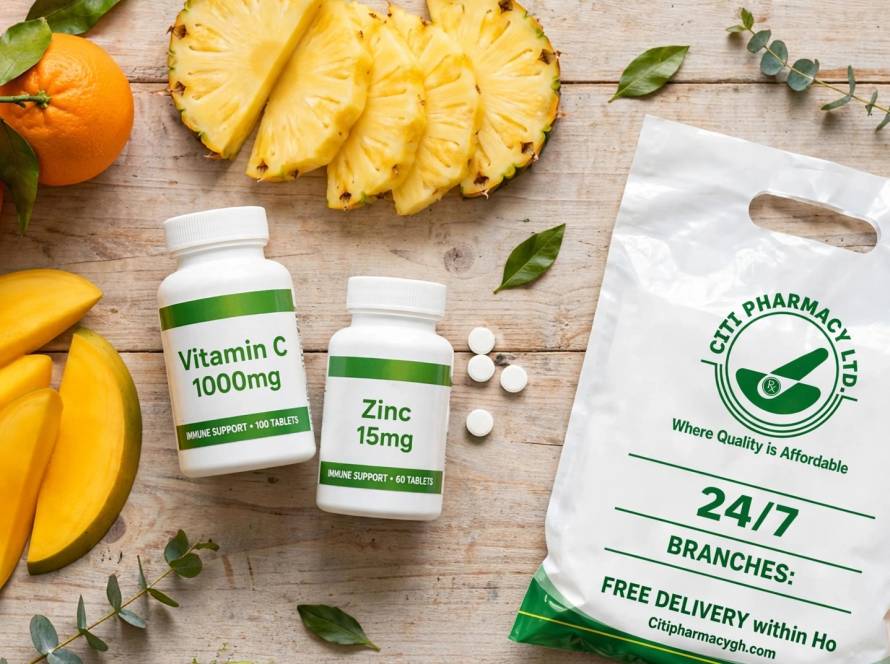
At Citi Pharmacy, we stock ORS, probiotics, zinc tablets, and electrolyte drinks. Ask our pharmacist for guidance if you suspect food poisoning.
FAQs
1. What is the fastest way to recover from food poisoning in Ghana?
Rest and aggressive rehydration with ORS and coconut water. Start with bland foods like plain rice, banana, and hausa koko only after vomiting stops. Most mild cases resolve in 1-3 days.
2. Can I take Flagyl or other antibiotics for food poisoning?
No, do not self-medicate. Most food poisoning is caused by viruses or toxins that antibiotics cannot treat. Some bacterial cases need specific antibiotics prescribed after stool tests. See a doctor/pharmacist first.
3. Is leftover jollof or fried rice safe to eat the next day?
Only if it was refrigerated within 2 hours of cooking. Rice left in the rice cooker or outside overnight can grow _Bacillus cereus_ which causes severe vomiting and diarrhoea, even after reheating.
4. What local foods are safest during food poisoning?
Plain white rice, rice water (omɔ tuo water), boiled yam, plain koko, banana, and light clear chicken soup without oil or too much pepper. Avoid spicy, oily, and milky foods until you are fully recovered.
Feeling dehydrated or having persistent symptoms? Chat with a Citi Pharmacy pharmacist online or visit any of our branches in Ho today for ORS and professional advice.
References:
1. Pulse Ghana – Food poisoning: Causes, symptoms and treatments
2. Adomonline / MyJoyOnline – Food safety principles for prevention of food poisoning in Ghana
3. Ghana http://Hospitals.org – Common causes of food poisoning
4. WHO – Food safety facts: Foodborne illnesses kill 230,000 annually, with Africa having highest burden
5. CDC – BRAT diet and food poisoning treatment